
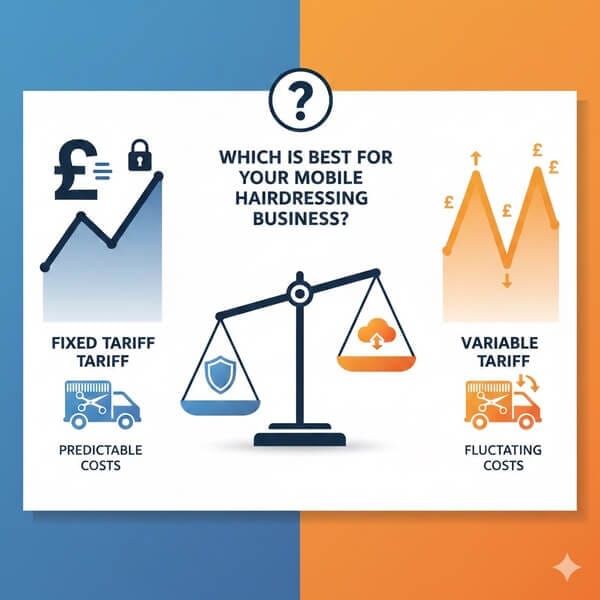
Running a mobile hairdressing business means juggling appointments, travel logistics, client expectations, and ongoing costs. Energy bills might seem like a minor expense compared to your equipment or supplies — but choosing the wrong tariff could quietly drain your profits every single month. Understanding the difference between fixed and variable energy tariffs is one of the simplest ways to take control of your operating costs.
The Two Main Energy Tariff Types — Explained Simply
Fixed-Rate Tariff
With a fixed-rate tariff, the price you pay per unit of energy (kWh) is locked in for the duration of your contract — typically 12, 24, or 36 months. Your bill may still vary slightly depending on how much energy you use, but the unit rate itself won’t change regardless of what’s happening in the wider energy market. This means no surprises, no sudden spikes, and consistent pricing you can plan around.
Variable-Rate Tariff
A variable-rate tariff moves in line with the wholesale energy market. Prices can rise or fall — sometimes with very little notice. When energy prices drop, you could benefit from lower bills. But when prices spike (as they did dramatically in recent years), your costs can increase significantly with very little warning.
Fixed vs. Variable Energy Tariffs for Mobile Hairdressers: Side-by-Side Comparison
| Feature | Fixed-Rate Tariff | Variable-Rate Tariff |
| Price Stability | Locked in for contract term | Changes with the market |
| Budget Planning | Easy — predictable monthly cost | Difficult — bills can vary widely |
| Market Savings | Not available | Possible when prices drop |
| Exit Fees | Usually applies | Often none |
| Best For | Stability-focused businesses | Risk-tolerant, active switchers |
Why Fixed-Rate Tariffs Suit Most Mobile Hairdressers
1. Predictable Costs = Better Budgeting
As a mobile hairdresser, your income can vary week to week depending on bookings, cancellations, and seasonal demand. The last thing you need is unpredictable energy bills adding another variable to the mix. A fixed tariff lets you include a set energy cost in your monthly budget with confidence.
2. Protection From Market Volatility
The wholesale energy market is notoriously volatile. Geopolitical events, seasonal demand, and supply disruptions can cause prices to spike rapidly. A fixed-rate contract insulates your business from these external shocks — meaning your bottom line stays protected even when the market turns.
3. Focus on Growing Your Business
Constantly monitoring the energy market and switching suppliers to chase lower variable rates takes time and energy you don’t have. A fixed tariff removes that mental load entirely, freeing you to focus on what actually drives revenue — your clients and your craft.
4. Easier Financial Planning for Investment
Whether you’re planning to invest in new cordless tools, a professional steamer, or a vehicle upgrade, knowing your fixed overheads makes financial forecasting far more reliable. Lenders and accountants appreciate businesses that can demonstrate consistent cost control.
When a Variable Tariff Might Still Be Worth Considering
Variable tariffs aren’t always a bad choice. If wholesale energy prices are currently high and forecasted to drop significantly, locking into a fixed deal could mean overpaying relative to where the market moves. However, predicting energy markets is notoriously difficult — even professional traders get it wrong regularly.
Variable tariffs can also be useful for very short-term arrangements, or if your business model is in transition and you don’t want to be tied into a lengthy contract. Just ensure you’re monitoring prices actively and prepared to switch if costs rise.
Practical Steps to Choose the Right Tariff
- Review your last 3–6 months of energy bills to understand your typical usage patterns.
- Identify how much of your energy use is business-related (tool charging, home office, towel laundry, etc.) versus personal.
- Compare multiple suppliers — don’t assume your current provider offers the best deal.
- Pay close attention to contract length, unit rates, standing charges, and any exit fees.
- Ask about green energy options if sustainability matters to your brand — some suppliers offer competitive fixed-rate green tariffs.
- Set a calendar reminder before your contract ends so you can reassess and switch before rolling onto a more expensive out-of-contract rate.
Key Energy Tips Specific to Mobile Hairdressers
Tools & Equipment: Modern cordless clippers and dryers are more energy-efficient than older models. Upgrading can reduce your home charging costs over time.
Home Office Usage: If you manage bookings and admin from home, consider a smart plug or energy monitor to track the actual cost of running your business from home.
Towel Washing: Washing towels on lower temperature cycles (40°C instead of 60°C) and using full loads significantly reduces energy use without compromising hygiene.
Client-Side Energy: If you plug equipment in at a client’s home, that energy cost falls on them — but being mindful of usage keeps your professional relationship positive.
Final Thoughts
For most stylists, choosing between fixed vs. variable energy tariffs for mobile hairdressers is about finding the right balance of stability, predictability, and peace of mind. While variable tariffs can occasionally deliver savings, the risk of sudden price rises makes them a less reliable choice for a business where margins already require careful management.
The best move is to stay proactive: compare deals regularly, understand your usage, and always switch before your contract rolls over to a default rate.
Ready to find a better energy deal for your business?
Visit Utility7 at www.utility7.com to compare energy tariffs tailored for small and mobile businesses. It only takes a few minutes to find out if you could be saving — and those savings add up fast.