
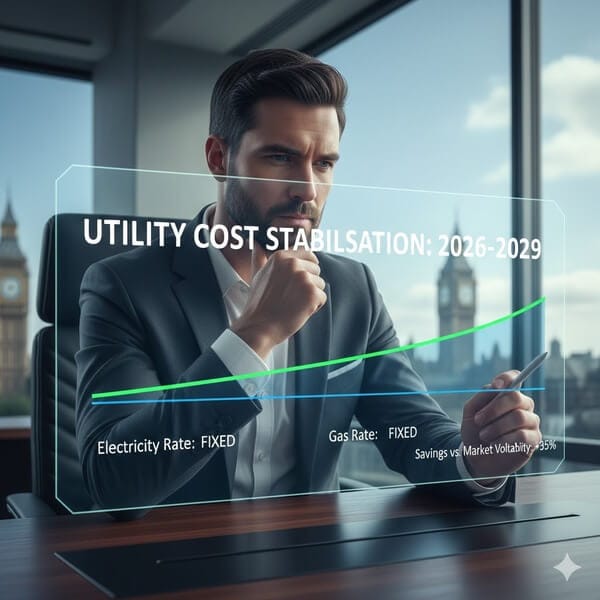
Utility Stabilisation
Running a new business in the UK comes with countless challenges, but one of the most overlooked threats is the unpredictability of utility costs. Energy and water markets fluctuate constantly, and without proper planning, a sudden price spike can severely impact your cash flow. This is where utility stabilisation becomes crucial—a strategic approach to keeping your monthly bills predictable and protected from market shocks.
Why Utility Stabilisation Matters
Many new businesses unknowingly operate on “deemed” or “out-of-contract” rates, which can cost 30-50% more than negotiated contracts. Without a stabilisation strategy, you’re essentially leaving money on the table every month. The goal is simple: shift from reactive bill-paying to proactive cost management.
Core Strategies for Stabilising Utility Costs
1. Fixed-Rate Tariffs: Your Foundation for Certainty
Locking in a fixed-rate contract (typically 1-3 years) is the most effective way to achieve budget certainty. Regardless of how global energy prices fluctuate, your unit rate stays the same, allowing you to forecast costs accurately and protect your margins.
2. Direct Debits: Smoothing Out Seasonal Spikes
Direct debits do more than prevent late payment fees—they distribute your annual costs evenly across 12 months. This prevents the cash flow strain that comes with winter “bill shocks,” when heating costs can triple. As a bonus, many suppliers offer 2-5% discounts for choosing this payment method.
3. Smart Meters: The Power of Real-Time Data
You can’t manage what you can’t measure. Smart meters update approximately every 30 minutes, giving you visibility into consumption patterns and helping you spot inefficiencies or equipment malfunctions before they become expensive problems. They also eliminate estimated bills, ensuring you pay only for actual usage.
4. Building Efficiency Buffers
For the first few months of operation, build a 15-20% buffer into your utility budget to account for unexpected consumption patterns or seasonal variations. Start by understanding your baseline: list all major equipment, note their power ratings, and estimate daily running hours. This prevents overpaying for capacity you don’t actually need.
5. Contract Review Discipline
The UK utility market is competitive, but only if you actively engage with it. Set calendar reminders to review your contracts 90-120 days before renewal. This prevents automatic rollover onto expensive standard variable rates and gives you leverage to negotiate better terms.
How Utility7 Achieves Stability for You
Managing utility stabilisation while launching a business is genuinely challenging. This is where Utility7 steps in as your trusted business utility consultant, specialising in:
- Multi-Supplier Comparison: Comparing at least 5 different suppliers to find the most stable and competitive rates
- Wholesale Rate Negotiation: Accessing wholesale rates that are often unavailable to individual businesses
- Market Trend Monitoring: Tracking market conditions to alert you when wholesale prices drop, potentially triggering beneficial renegotiations
Taking Action Today
Market volatility doesn’t have to control your profit margins. By implementing these stabilisation strategies—fixed contracts, payment smoothing, real-time monitoring, smart budgeting, and regular reviews—you create a foundation for financial predictability that allows you to focus on growing your business rather than worrying about the next utility bill.
The key is to start early: ideally before you even sign your first contract. The decisions you make in month one can impact your costs for years to come.
Ready to Stabilise Your Utilities?
Don’t let unpredictable utility costs threaten your business’s financial stability. Contact Utility7 today:
Call: +447913685973
Email: info@utility7.com
Office: The Quadrant, 3 Warwick Rd, Coventry, UK, CV1 2D
Secure your business’s financial future with expert utility management